



Walk into any bustling dim sum spot, and a steaming pot of amber liquid lands on your table almost instantly. While it might seem like a generic house brew, there is actually no single standard leaf. The tea in your heavy ceramic cup is a highly functional tool, shaped over decades by regional cuisines, migration history, and the practical economics of running a restaurant.
Why Restaurant Tea Works
At its core, house tea operates on entirely different rules than a formal tasting session. It is built for volume, endurance, and real culinary utility. The primary job of this brew is to cut through heavy oils, refresh your palate, and handle hours of steeping without turning bitter.
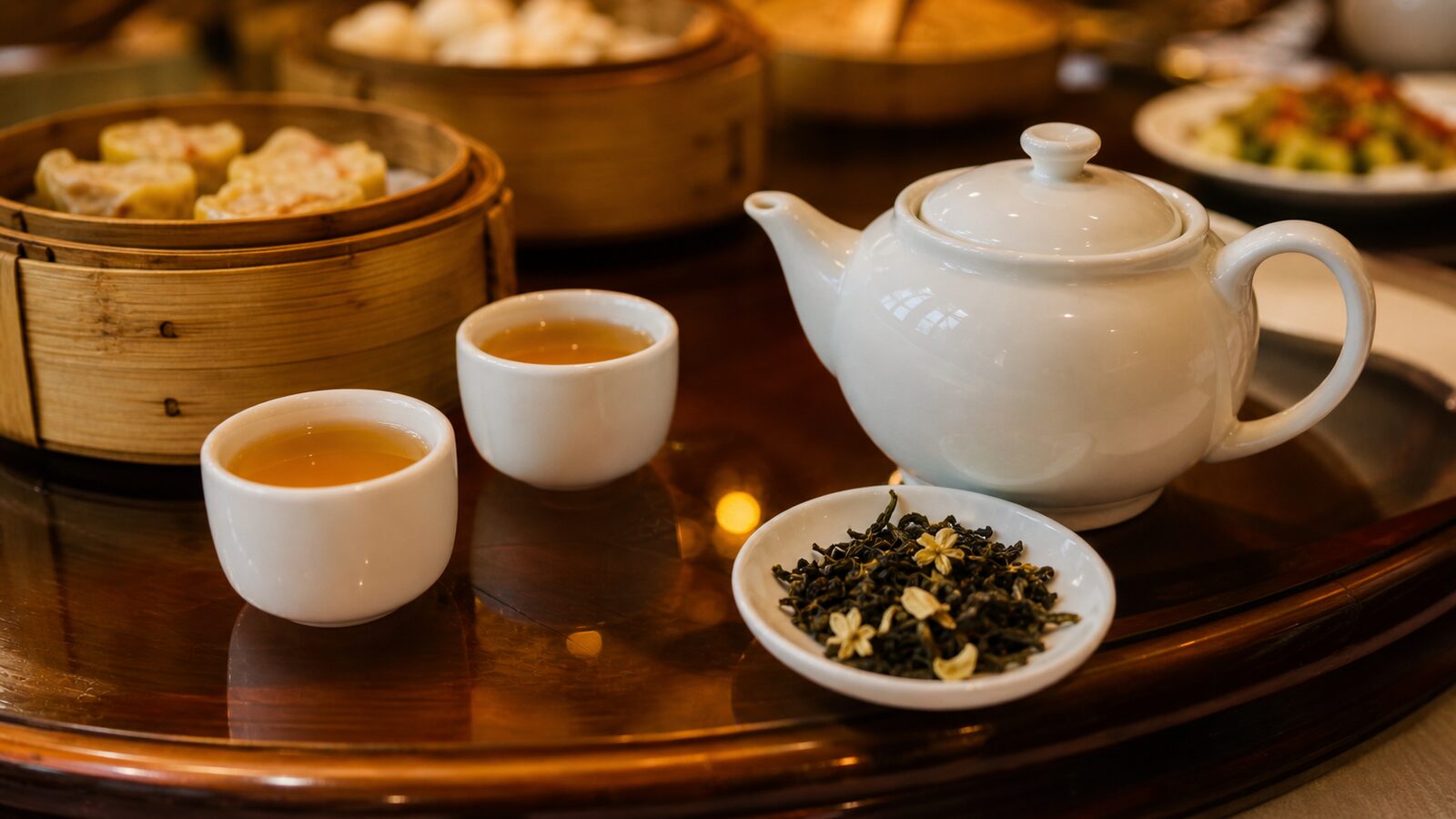
To do this, restaurants need sturdy leaves that release flavor slowly over several hot water refills. The brewing itself is fast and heavy, using large teapots and boiling water to quickly pull out bold compounds. It is a highly practical setup designed for sensory contrast, a far cry from the precise measurements of traditional gongfu brewing methods.
The final cup is strong and robust by design. It delivers a natural tannic structure that balances the rich fats, spices, and heavy starches on your plate.
Regional Pairings and Culinary Logic
The tea a restaurant serves is rarely a random choice. It follows a clear culinary logic based on the local menu and how our bodies process different types of food.
- Cantonese dim sum spots rely on aged Shoumei white tea or dark Shou Pu-erh. The fermentation process creates polyphenols that help break down the rich fats in pork dumplings and fried pastries.
- Sichuan restaurants serve heavily spiced, numbing dishes that need a different counterweight. Roasted oolong or Tieguanyin cuts through the oil, while its natural sweet finish helps soothe the heat of chili peppers.
- Northern Chinese dining features hearty braised meats and wheat staples. These dishes pair beautifully with fully oxidized black teas like Keemun or Dianhong, which help soothe the stomach after a heavy meal.
How House Tea Became Free
The tradition of the free, bottomless teapot goes back to the migration waves of the late nineteenth century. As early Chinese immigrants opened businesses in overseas Chinatowns, they wanted an affordable way to welcome diners with a familiar comfort. The harsh realities of ocean shipping decided exactly which teas made it to those early tables.
Importers heavily favored Bo-lay, the Cantonese name for Shou Pu-erh, because of its incredible shelf life. These fermented tea cakes easily survived long, damp ocean voyages without spoiling. This durability made it the most reliable, budget-friendly option for early restaurant owners working with tight margins.
Around the same time, jasmine tea gained massive popularity for practical reasons. Scenting the leaves with floral aromas was an easy way to cover up the taste of older crops or harsh local tap water. Over the decades, this floral profile became a familiar classic, earning a permanent spot on restaurant tables.
Inside the Commercial Brew
To understand why restaurant tea tastes the way it does, we have to look at how commercial tea is sourced. These are food-service-grade leaves, processed specifically to handle long steeps rather than to show off delicate, seasonal nuances.
The hallmark of a great restaurant tea is physical endurance — the ability to handle boiling water and hours of steeping without losing its core character.
We can see this durability in classic brands used worldwide. The famous Sunflower Brand — widely available in Asian grocery stores in its distinctive yellow tin — has been the global standard for jasmine tea for generations. Its leaves are intensely scented to produce a punchy, clean floral aroma that cuts straight through heavy, soy-based sauces.
For oolong, traditional spots often turn to the classic Sea Dyke brand, typically sold in flat paper boxes with a simple red-and-gold design. These leaves undergo a heavy roast to ensure a long shelf life, resulting in deep, caramelized notes that easily stand up to heavily seasoned dishes.
Teahouse Etiquette and Customs
Drinking tea in a busy restaurant comes with a quiet, centuries-old language of hand gestures. These movements help keep the meal moving and show respect without interrupting the lively conversation around the table. The most famous of these is the simple finger-tap, which acts as a silent thank you.
This custom is said to date back to the Qianlong Emperor traveling in disguise. His bodyguards needed a way to thank him for pouring tea without revealing his royal identity, so they tapped their fingers on the table instead of bowing. Today, the rules are still beautifully simple:
- Use one finger to thank friends or peers of your own age.
- Use two fingers (index and middle) if you are thanking an elder or host.
- Gently tap with all five fingers curled into a fist to show formal, deep respect.
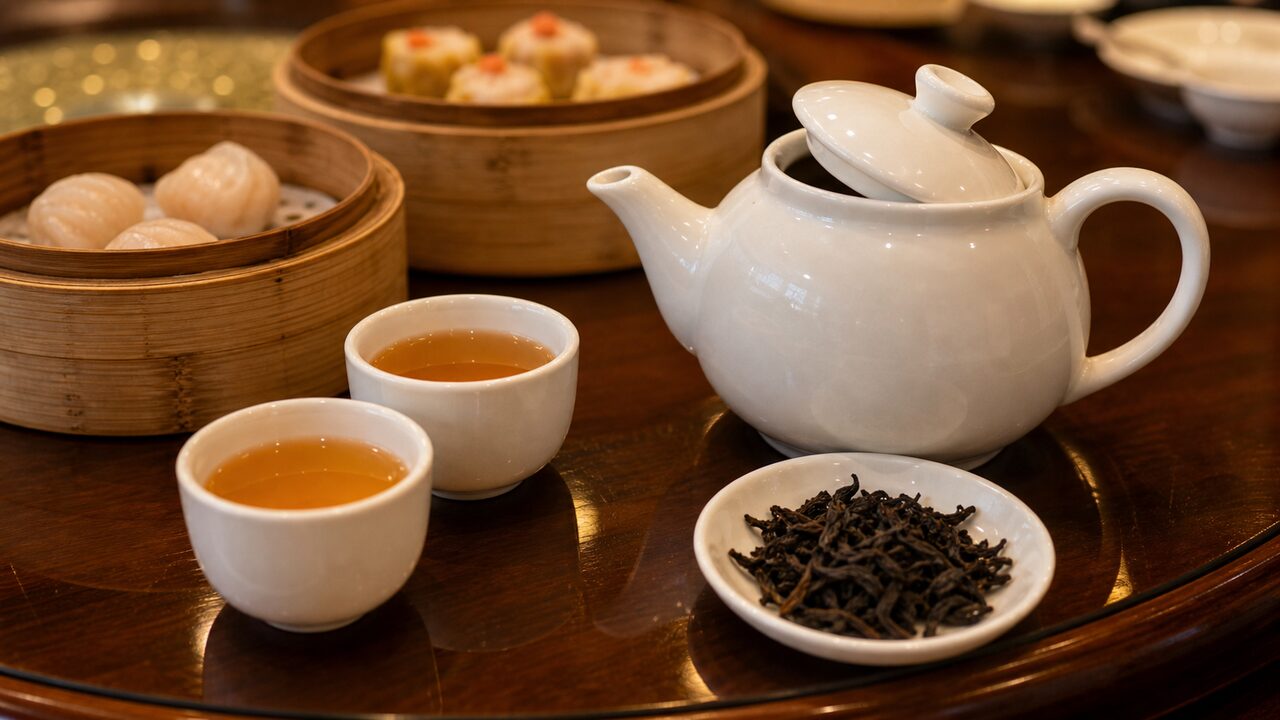
Another key signal is tilting the teapot lid. Resting the lid half-open on the top of the pot tells the busy staff that you need a hot water refill. This habit started in historical teahouses as a clever visual cue, letting servers know to grab the pot without needing to ask.
Brewing Restaurant-Style Tea at Home
To get this same bold, palate-cleansing effect at home, you have to recreate the intense brewing methods of a professional kitchen. Gentle, low-temperature steeping simply won’t pull out the strong structure needed to balance a rich meal. Everything starts with your water temperature.
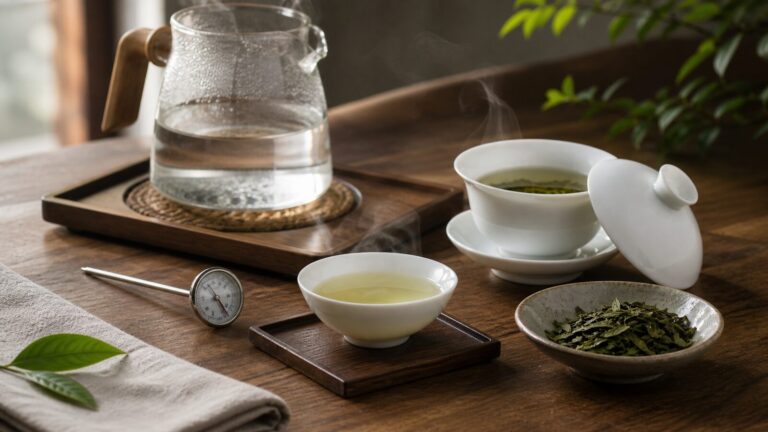
Use rolling boiling water, ideally between 95°C and 100°C. The moment it hits the dry leaves, you will notice the aroma lift immediately — roasted oolong releases a warm, caramel smoke, while jasmine opens up with a clean floral burst. That first rush of scent tells you the extraction is working. Next, increase your tea leaves to build a heavier texture.
Aim for a leaf-to-water ratio of about 1:40 or 1:50, which means using roughly 30% to 50% more leaves than you normally would. Let it steep for three to five minutes, but make sure to strain the leaves before the five-minute mark. If you let it go longer, the tea will over-oxidize and turn uncomfortably bitter.
Bringing Purpose to the Ritual
At home, the rushed pace of a busy dining room fades. The deep caramel of a roasted oolong or the grounding earth of an aged pu-erh takes on a different character when you control the timing. Whether you enjoy serving guests with traditional Chinese teaware or prefer the simplicity of a classic gaiwan, these small details turn an everyday drink into a grounding personal ritual.
The next time you sit at a crowded round table and a hot cup is poured, that steaming amber liquid will tell a richer story. With every sip, you are tasting a balance of regional culinary science, historic resilience, and a living, functional tradition.
References
- Journal of Ethnic Foods: Cantonese morning tea (Yum Cha) – supports the cultural context around tea, dim sum, and Cantonese restaurant practice.
Frequently Asked Questions
Most establishments serve jasmine, Shou Pu-erh, or roasted oolong tea. These specific varieties are chosen because they withstand continuous steeping and easily cut through rich, oily dishes.
Tapping the table is a silent gesture of gratitude to the person pouring your tea. The custom originated as a way to thank a disguised emperor without revealing his royal identity.
Leaving the lid half-open signals to the waitstaff that your teapot needs a hot water refill. This visual cue avoids interrupting the conversation at your table.
Yes, traditional restaurant options like jasmine green tea, oolong, and pu-erh naturally contain caffeine. If you require a caffeine-free alternative, you can request hot water or pure chrysanthemum tea.
Warm tea, especially aged pu-erh, contains compounds that help the body process heavy starches and fats. The heat also relaxes the digestive tract during a rich meal.
Look for hand-thrown clay or high-fired porcelain that balances comfortable weight with excellent heat retention. Authentic pieces, like the artisan-made gaiwans we source at East Artisan, are designed to make daily brewing both functional and tactile.
Scenting green tea with fresh jasmine blossoms originally helped mask the flavor of older tea crops and harsh local water. Over time, this refreshing floral profile became a classic culinary pairing worldwide.