



Gongfu brewing has a reputation for needing a dedicated table, a drainage tray, and a small army of accessories. In practice, the method was built around small vessels and quick, repeated steeps, which makes it one of the easier styles to take on the road, once you know which pieces actually earn their space in a suitcase.
Most travelers end up choosing between two bad options: leaving the gear home and settling for a bad hotel tea bag, or packing too much and worrying the whole trip about something cracking. Neither is necessary. Getting a short, well-chosen list right matters more than owning a full set.
The Two Pieces You Actually Need
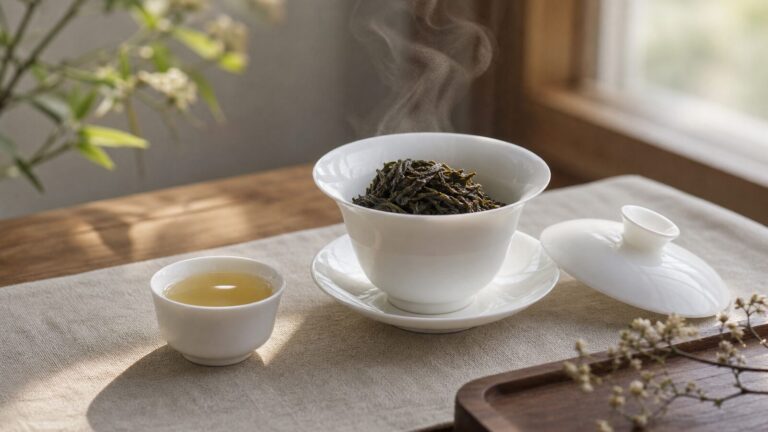
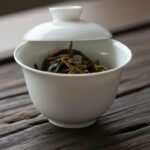
A gaiwan or a small teapot under 150ml does almost all the work. Porcelain is the lightest, most flavor-neutral option for travel, since it won’t pick up smells from a packed bag the way unglazed clay can.
The second piece, a fairness cup or gongdao bei (公道杯), matters even more on the road than at home. Hotel kettles and travel burners heat unevenly, so pouring through a fairness cup before serving keeps every cup at the same strength instead of leaving the first pour weak and the last pour bitter.
Everything past these two pieces is convenience, not necessity. If your bag has room for nothing else, a gaiwan and a fairness cup are enough to brew properly anywhere.
Cups Without the Excess
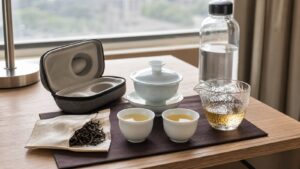
Two or three small cups cover almost every travel scenario, whether you’re brewing solo or sharing with one or two people. Look for travel tea sets where the cups nest inside each other or stack inside the teapot itself, since that’s usually where the real space savings happen.
Dedicated aroma cups, common in some home Gongfu setups, are easy to leave behind. They add a step that’s genuinely nice at a leisurely tea table, but not essential when you’re brewing in a hotel room or between train stops.
Small Tools That Earn Their Space
A pair of cha jia (茶夹), or tea tongs, is worth the small amount of room it takes. They let you handle just-rinsed, scalding cups without burning your fingers, and double as a clean way to clear spent leaves from the gaiwan.
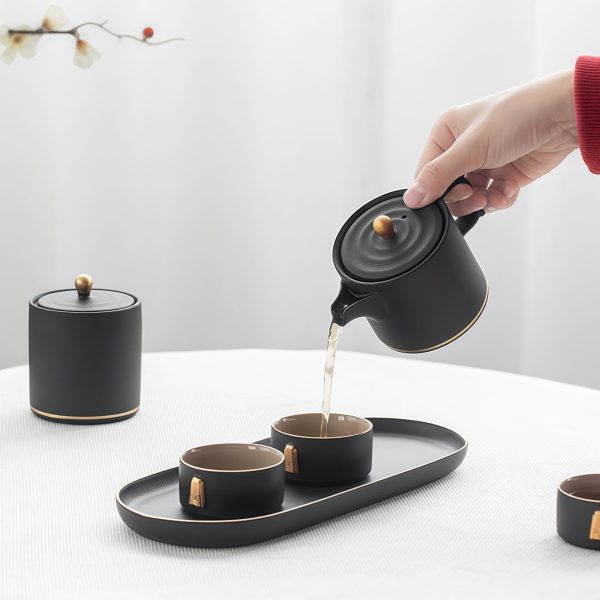
A simple tea scoop helps too, mostly so you’re not pinching damp leaves out of a bag with your fingers. Beyond these two, most other accessories from a home setup, like a tea pet or an elaborate tea tray, are worth leaving behind. They add charm at a fixed table, but no real function on the road.
Protecting Porcelain in Transit
The weakest point of any gaiwan is where the lid meets the rim. Constant vibration during travel can knock these two parts against each other, and that’s usually where chips start.
A simple buffer solves this. Wrap a thin cloth between the lid and the rim, or secure the lid in place with a bit of paper tape before it goes in your bag.
Soft-sided tea cases are easy to crush under heavier bags in checked luggage. If you have to check your gear, place it in the center of a hard-shell suitcase and surround it with a thick layer of rolled clothing for cushioning.
Preventing Thermal Shock
A cold gaiwan or cup straight out of a winter travel bag shouldn’t meet boiling water directly. The sudden jump in temperature stresses thin porcelain and handmade clay, and that stress is what causes hairline cracks over time.
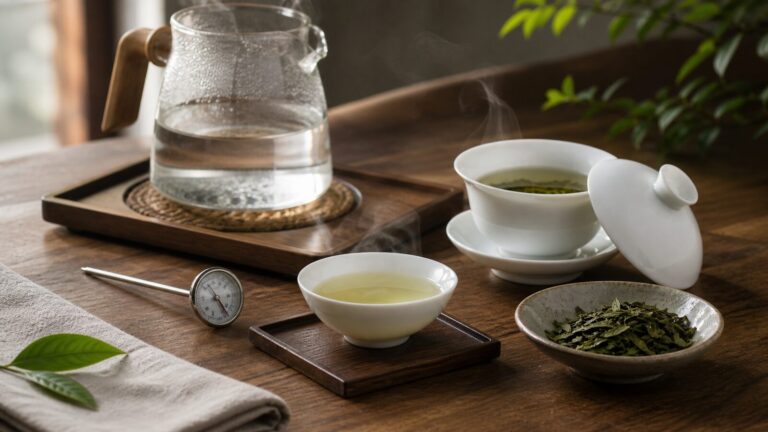
The fix is the same one used at home: warm the vessel gradually. Pour in warm water first, around 40 to 50°C, let it sit for a minute, then discard it before brewing with properly hot water.
Solving the Drainage Problem
A full Gongfu tray with a built-in reservoir is the single heaviest, least packable item in the whole setup, and it’s also the easiest one to skip. Many home brewers already use a dry station, or gan pao tai (干泡台), instead of a draining tray, simply wiping up spills as they go rather than building a system to catch them.
For travel, a small absorbent cloth or a folded microfiber mat does the same job. Pour over it, blot it dry between rounds, and pack it separately once it’s damp so it doesn’t sit against your other gear.
Leaf Storage and Measuring
Tea picks up moisture and odor quickly in transit, so a small opaque, airtight canister matters more while traveling than it does at home. Avoid clear containers, since light exposure fades aroma faster, especially on a multi-day trip.
Pre-measuring your leaf into small portions before you leave removes one more decision from the road. A few paper sachets or small lidded jars, each holding a single session’s worth of leaf, mean you’re never guessing or eyeballing amounts in an unfamiliar room.
A Complete Packing List
Here’s the full kit, scaled down to what actually matters:
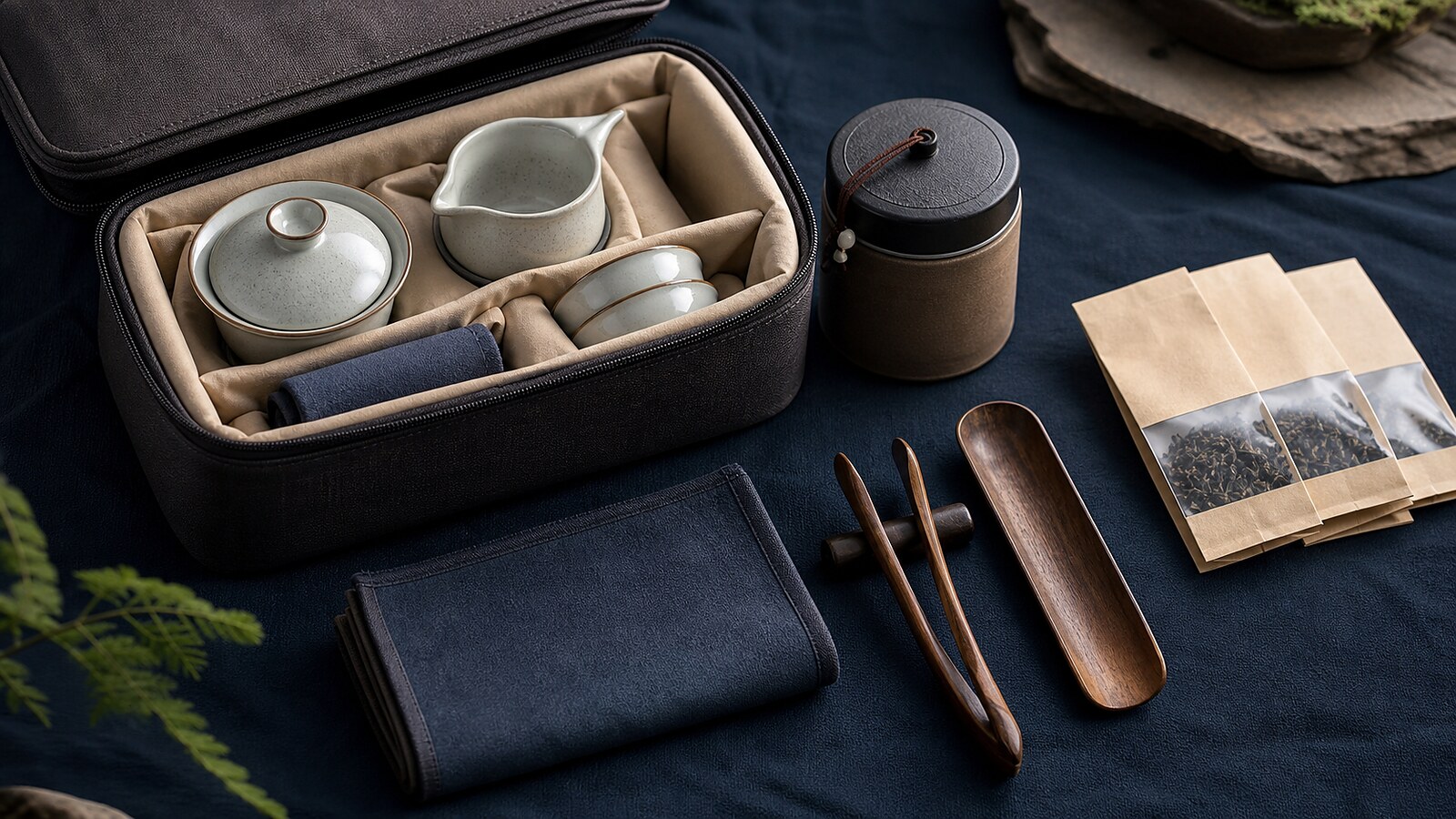
- A porcelain gaiwan or small teapot, under 150ml
- A fairness cup (gongdao bei) sized to match
- Two or three nesting cups
- A pair of tea tongs (cha jia)
- A small tea scoop
- A thin cloth or tape to secure the lid and prevent chipping
- An absorbent cloth or folded mat in place of a full tray
- An opaque, airtight canister with pre-measured leaf portions
None of this requires a dedicated tea bag or a hard case, though both help if you’re a frequent traveler. If you are flying, remember that the TSA liquids rule applies to water and other liquids in carry-on luggage, so pack dry leaves and empty vessels, then source water after security. The point of Gongfu brewing was never the table it sits on. Pack the few pieces that actually shape the cup, treat them gently in transit, and the ritual travels with you just fine.
Frequently Asked Questions
Wrap nesting pieces inside one another, starting with a gaiwan. Use natural linen cloth instead of bulky foam to absorb vibration and double as a tea mat. If using a suitcase, place the bundle in the center surrounded by five centimeters of rolled clothing.
Pouring boiling water into cold clay or porcelain causes rapid thermal expansion. This sudden physical stress easily splits handmade ceramics. To prevent damage, always pre-warm your vessels with warm tap water first.
While titanium is highly durable and lightweight, it loses heat very quickly. This rapid cooling flattens the delicate, volatile aromas of high-mountain teas. Traditional ceramics like celadon offer far better heat retention for a balanced brew.
Yes, but heavily compressed tea cakes often look suspicious on airport security scanners. Keep them in your carry-on luggage with their original labels clearly visible. This allows security staff to easily identify the leaves without handling them.
A traditional heavy tray is unnecessary and bulky for travel. A thick, absorbent linen runner or tea cloth works perfectly to catch stray drops. This minimal approach keeps your kit light and respects the space of your temporary surroundings.
Look for natural spring water with a neutral pH and low mineral content. An ideal total dissolved solids (TDS) level is around 50 to 100 ppm. Distilled or highly mineralized alkaline waters will make your tea taste flat or excessively bitter.
Individually portioned dragon balls or loose-leaf oolongs are highly convenient. They require no scale or breaking tools on the road. Simply pack them in small, airtight tins to protect them from light and ambient odors.
Select a compact, thick-walled porcelain gaiwan under eighty-five millimeters in diameter. It should feel balanced in your hand and nest easily with other wares. Our travel selections at East Artisan are curated specifically with these functional proportions and thermal qualities in mind.