



A sterile hotel room, a questionable plastic kettle, and a paper cup do not make for an inviting tea session. At first glance, brewing exceptional loose-leaf tea in such an environment feels nearly impossible. However, the real barrier is rarely the location itself; it is our habit of relying on heavy, stationary gear.
By focusing on the core variables of water, temperature, and space, you can brew a pristine cup anywhere. Adapting classic brewing principles to modern travel tea gear lets you transform even the most cramped desk into a functional tea space. Excellent tea and a mobile lifestyle do not have to be mutually exclusive.
Ancient Modularity for Modern Travel
Centuries ago, Ming Dynasty scholars faced a similar challenge when carrying their tea practice into the mountains. Refusing to compromise on quality, the scholar Gao Lian organized a full tea setup into one woven bamboo case he called qi ju (器局), explicitly built as an update to an even older idea: Lu Yu’s dou lan (都篮), the carrying basket described centuries earlier in the Tang Dynasty Classic of Tea. Both versions nested every vessel securely, keeping dry leaves, fresh water, and delicate porcelain safely separated.
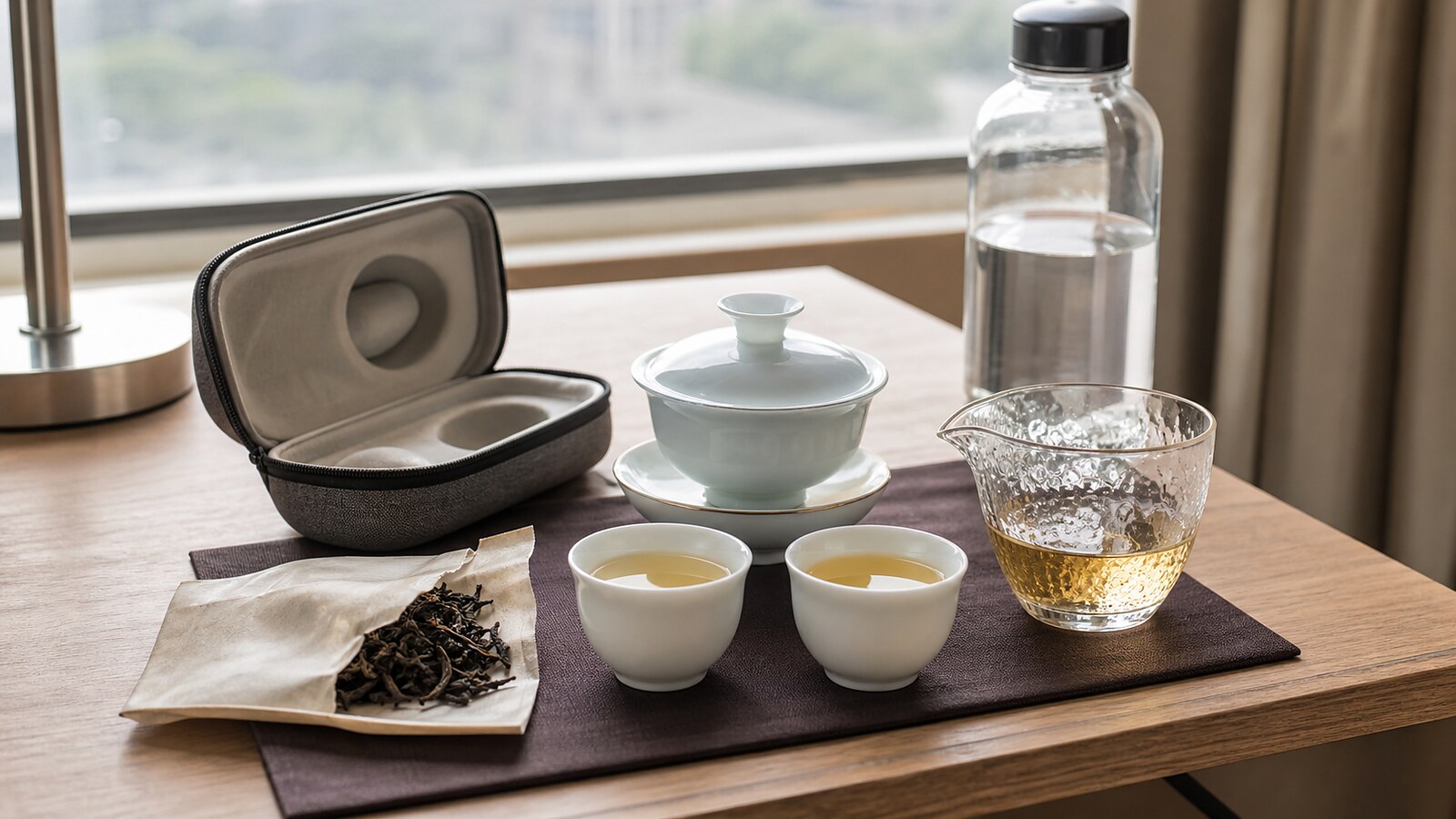
This historic approach to space-saving directly inspires the best modern travel tea sets. Many contemporary kits feature teapots that nest neatly inside the cups, reducing the physical footprint by nearly forty percent. This allows a complete, functional brewing system to slide easily into a small corner of your luggage.
The beauty of this setup lies entirely in its utility. It prioritizes clean engineering and physical balance over flashy design. When packing space is limited, the smartest gear is always the most functional, relying on precise craftsmanship rather than unnecessary bulk.
True mobility comes from smart spatial design, not from lowering your standards.
Temperature Control Without a Thermometer
Most of us rely on digital temperature-controlled kettles at home, which are far too bulky for a suitcase. Thankfully, simple physics offers a reliable way to gauge water temperature wherever you are. By leaving the lid off a freshly boiled kettle, the water temperature drops by roughly three to five degrees Celsius every minute.
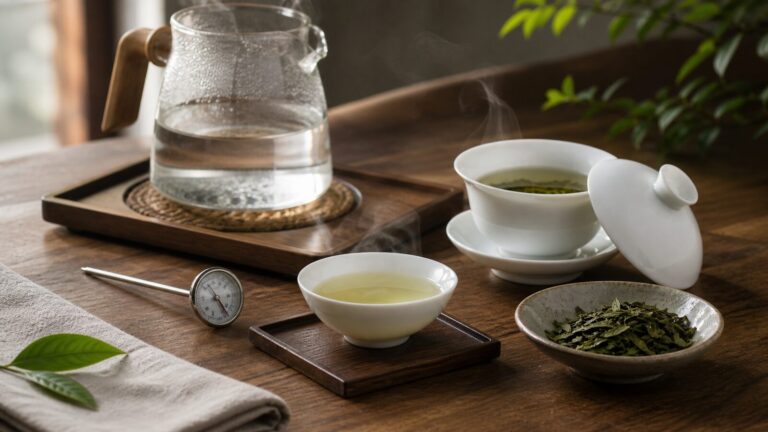
For a quicker solution, you can use a basic volumetric mixing technique. If you need 75 to 80 degrees Celsius for delicate green teas, fill your cup or decanter with one part room-temperature water first, then add three parts boiling water. This simple ratio hits the target temperature range consistently without any guesswork.
This precise range prevents bitter tannins from overpowering your brew while keeping delicate, sweet amino acids intact. All it requires is a standard bottle of water and the basic electric kettle found in almost any hotel room.
Managing Hotel Water Quality
Water is the canvas of your tea, and its quality dictates your final cup. Hotel tap water is often heavily chlorinated and loaded with unstable minerals that flatten the complex aromatics of fine tea. For delicate floral oolongs, using tap water can ruin the experience entirely. The CDC Yellow Book also treats food and water precautions as a practical travel-health issue, which is another reason to be selective about your brewing water on the road.
Sourcing the right bottled water is an essential step when you are on the road. Look for natural spring water with a Total Dissolved Solids reading between 50 and 150 milligrams per liter. This specific mineral balance provides enough structure to carry the tea flavor without muting its bright, subtle top notes.
Even with high-quality water, the hotel kettle itself can introduce off-flavors. Before heating water, always check the silicone seal around the lid or base of the kettle. These porous rings easily absorb odors from instant coffee, sugary oatmeal, or cleaning sprays, which will transfer directly into your water.
Choosing the Right Vessel Material
The material of your brewing vessel significantly impacts how your tea tastes. High-fired, thin-walled porcelain offers the purest flavor representation because it is completely non-porous. It does not absorb delicate aromas or alter the natural character of the leaves.
While porcelain is unmatched for flavor purity, its fragile nature means you need a well-padded case for travel. High-grade borosilicate glass is a sturdier alternative that offers excellent thermal shock resistance. It also lets you watch the leaves unfurl, adding a visual element to your session.
Some travelers opt for titanium gear to save weight, but it often lacks the tactile warmth of ceramic. For the best balance of durability and pure taste, a high-quality porcelain gaiwan protected by a rigid travel shell remains the gold standard.
High Mobility Grandpa Style
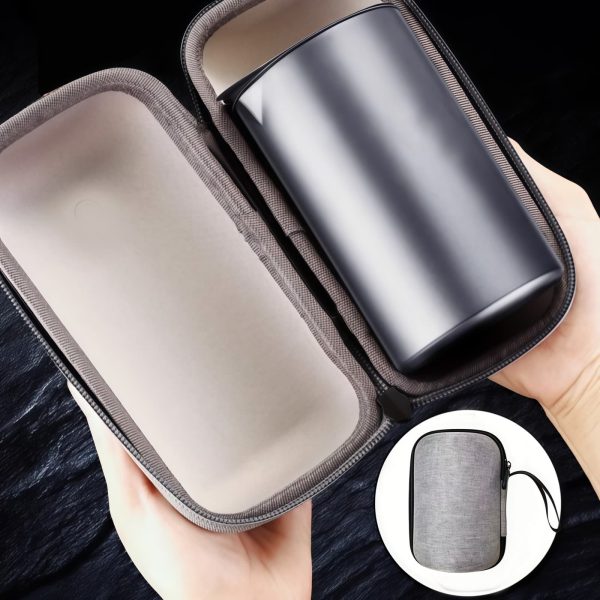
Sometimes, setting up a proper brewing tray is simply impossible, like during a turbulent flight or on a packed train. In these situations, brewing directly in a vacuum-insulated thermos is an incredibly practical fallback.
This continuous immersion method requires you to adjust your brewing parameters significantly. The golden rule here is to cut your usual leaf amount down to just two or three grams. Because the leaves are exposed to high heat for hours, normal brewing ratios will quickly make the tea unpleasantly bitter.
To get the best results, choose resilient leaves that thrive under sustained heat:
- Silver Needle white tea: The thick, downy buds handle continuous high temperatures beautifully without turning bitter.
- Ball-rolled oolongs: Their tightly rolled shape slows down the extraction rate over several hours.
- Aged Pu-erh: The dense leaves release deep, rich flavors gradually rather than all at once.
By adjusting your leaf volume to match the continuous heat, the thermos becomes a slow-release extraction tool rather than a container that stews your tea.
Here’s how setup and leaf amount typically shift across a few common travel scenarios:
| Scenario | Recommended setup | Leaf amount |
|---|---|---|
| Plane or train, no table space | Vacuum-insulated thermos, continuous steep | 2 to 3 grams |
| Hotel room with a desk | Porcelain gaiwan and hotel kettle | Standard ratio, around 5 to 7 grams per 100ml |
| Camping or outdoors | Borosilicate glass or titanium set | Standard ratio, adjusted for variable water temperature |
Gear Maintenance on the Road
Once the session is over, whether it happened mid-flight or at a hotel desk, the same gear that got you through it still needs a bit of care before the next use. Keeping your travel gear in top condition comes down to managing moisture. Storing damp cups and teapots inside an airtight travel case creates a perfect environment for mold and musty odors.
This is why highly porous, unglazed clay teapots are less suited for travel, as they retain water deep in their clay walls and take a long time to dry. If you must pack a slightly damp porcelain set, you can use a hotel hair dryer on a cool setting to dry the surface quickly.
Fabric-lined cases are particularly prone to trapping humidity. Always keep your dry leaves, brewing vessels, and any damp cloths separated in different compartments of your bag until everything is completely dry.
Consistent care is not an afterthought; it is the final, essential step of a respectful brewing practice.
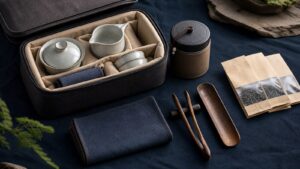 Pack the kit nextWhat to Pack for Gongfu Tea While TravelingWhat to Pack for Gongfu Tea While Traveling
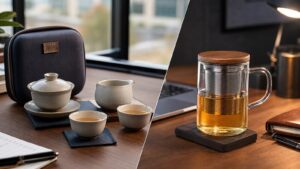 Choose the right toolTravel Tea Set vs Tea Infuser MugTravel Tea Set vs Tea Infuser Mug
Bringing a mindful tea practice into a busy travel schedule is incredibly rewarding. It proves that you do not need a dedicated tea room or heavy equipment to enjoy an exceptional cup, just a few thoughtful adjustments to your routine.
Frequently Asked Questions
Mix one part room-temperature water with three parts boiling water. This simple ratio instantly lowers the temperature to about 75 to 80 degrees Celsius. It is ideal for brewing delicate green teas without a thermometer.
Look for natural spring water with a Total Dissolved Solids reading between 50 and 150 milligrams per liter. This specific mineral balance allows the tea's subtle flavors to emerge. Avoid purified water, which often tastes flat.
Yes, but you must reduce your usual leaf amount to just two or three grams. The continuous heat of a thermos will otherwise make the brew unpleasantly bitter. Choose resilient leaves like Silver Needle or aged Pu-erh for this method.
Unglazed clay is highly porous and absorbs water deep within its walls. When stored in airtight travel cases, this trapped moisture quickly creates mold and musty odors. Non-porous porcelain is a much safer choice for the road.
A high-fired porcelain gaiwan nesting set with a rigid, padded carrying case is ideal. It offers absolute flavor purity and takes up very little space in your luggage. Our curated travel sets at East Artisan are sourced specifically to meet these demanding practical standards.
Yes, dry loose-leaf tea is permitted in both carry-on and checked luggage. Keep the leaves in their original, sealed packaging to make customs inspections smoother. Avoid bringing damp leaves, which can trigger security queries or mold during transit.
Store your leaves in small, airtight tin canisters or sealed foil pouches away from light and heat. Avoid plastic bags, which can leak odors and crush delicate leaves. Only pack the amount you need to keep your luggage light.
Flat-leaf green teas like Longjing travel exceptionally well because they do not crush easily. High-fired or roasted green teas are also highly stable and less sensitive to minor temperature variations. Avoid highly delicate, early-spring buds if you cannot control water quality.