



Pouring a fresh cup of green tea only to find it bitter and harsh is a common disappointment. It often leads people to assume they simply do not like green tea. But this bitterness is rarely the fault of the leaves themselves. It is usually a sign that something went wrong during brewing, and adjusting a few simple variables can fix your next cup.
The Chemistry of a Bitter Brew
To brew a better cup, it helps to understand the difference between a pleasant, crisp bite and harsh bitterness. A great green tea should offer a gentle astringency that cleanses your palate and leaves behind a sweet aftertaste. When the tea turns aggressively dry and bitter, the chemical balance has shifted.
This balance depends on two main compounds inside the leaf. L-theanine provides the rich, savory sweetness that makes high-quality teas so prized. Catechins are bitter polyphenols that protect the plant in nature — and they fight back hard when you give them the chance.
Brewing tea is the delicate process of drawing out sweet amino acids while keeping bitter defensive compounds locked inside the leaves.
Catechins need high energy to dissolve into water. When the water is too hot or the leaves steep for too long, these heavy compounds rush out and overpower the sweet L-theanine completely.
Taming the Water Temperature
Water temperature is the main catalyst in brewing. Pouring boiling water directly onto delicate green tea leaves shocks them, rapidly releasing bitter catechins and ruining the flavor in seconds.
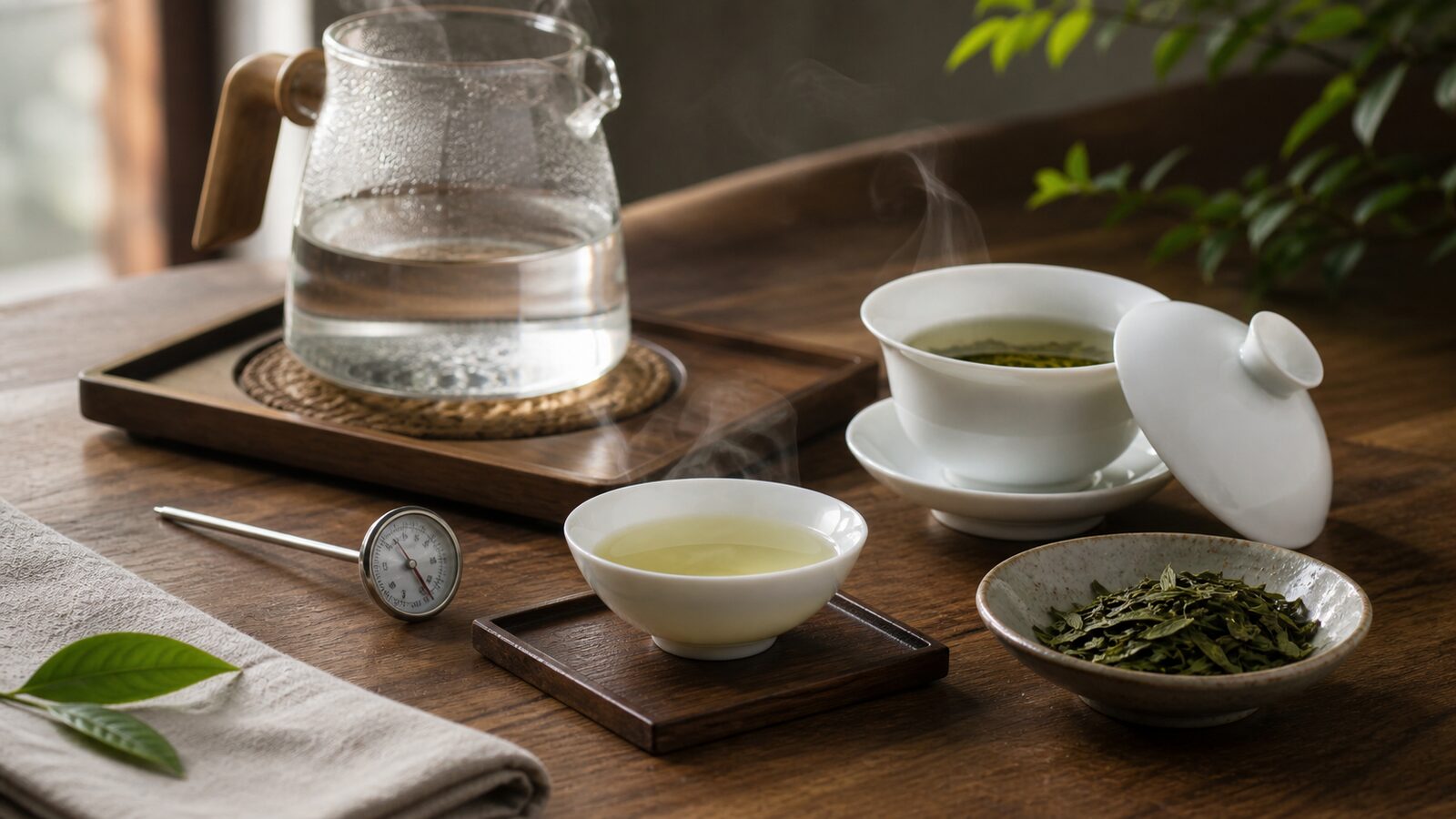
Many people guess the temperature straight from the kettle, which usually means water that is far too hot. Fortunately, you do not need a digital thermometer to get this right. A traditional water-sharing method handles it naturally.
Simply pour the boiling water into an intermediate pitcher or a spare mug before pouring it over your leaves. Each transfer to a cool vessel drops the temperature by roughly ten degrees Celsius. Two transfers gets you from 100°C down to around 80°C — the sweet spot for most green teas. This single habit draws out the sweet flavors without scorching the leaves.
Timing the Extraction Window
Steeping time is the second major factor in extraction. Leaving tea leaves in a mug indefinitely leads to over-extraction — and even if your water temperature is correct, letting the leaves sit too long will eventually release those bitter tannins.
You can often spot over-extraction before you even take a sip. A properly brewed green tea should be a pale, clear liquid ranging from soft yellow to light green. If it turns into a dark, cloudy amber, the bitter compounds have already taken over — and along with that color comes a dry, coating sensation on the back of your tongue that no amount of milk or honey will fix.
To avoid this, pour much earlier than you normally would. Adopting a gongfu-style brewing sequence — multiple short steeps with a high leaf-to-water ratio, where you pour off the tea quickly rather than letting it sit — separates the leaves from the water at precisely the right moment, and lets you taste each round as a distinct experience.
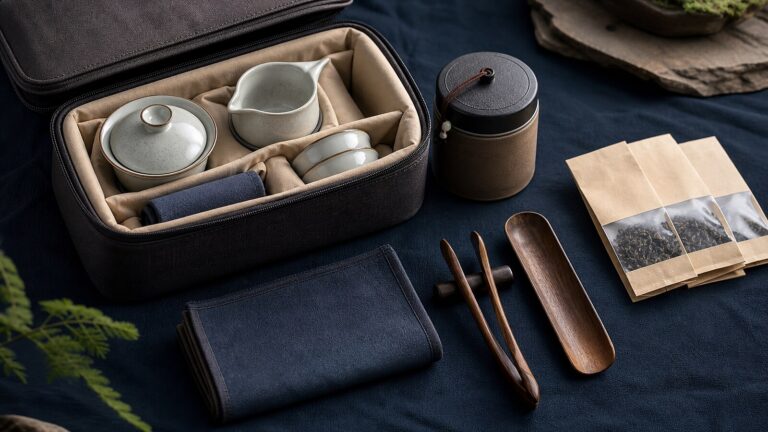
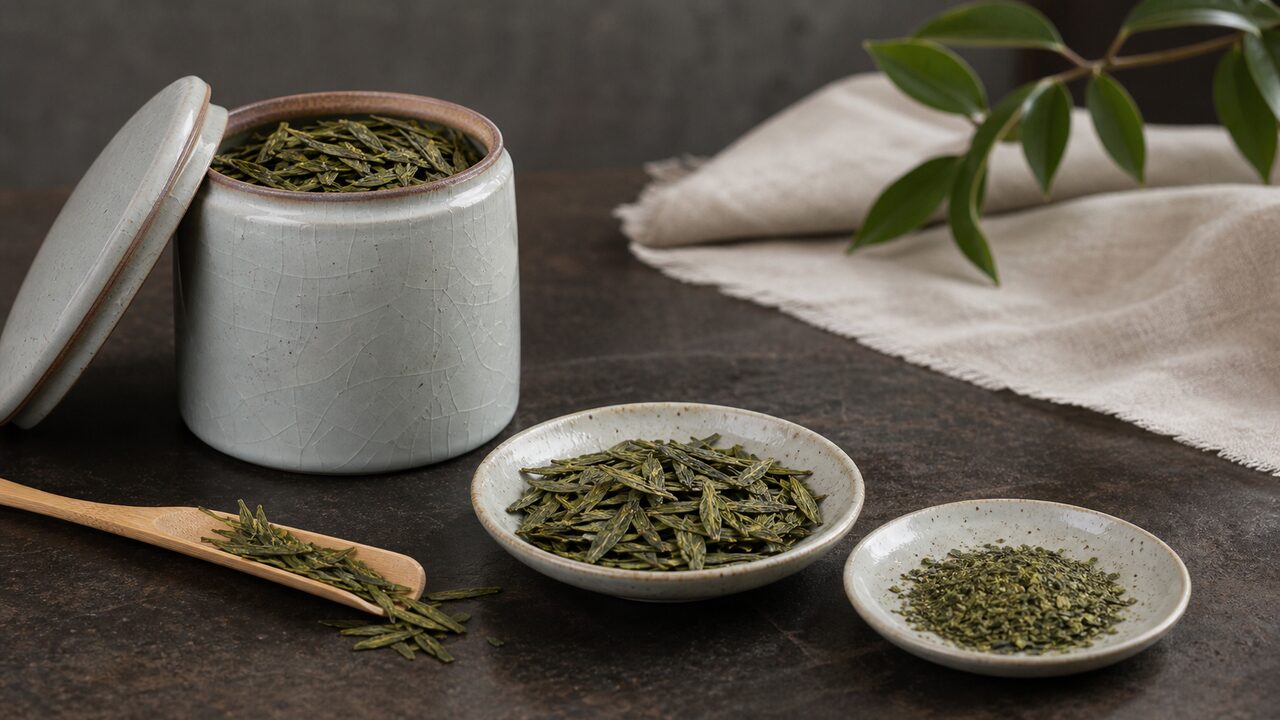
Whole leaves and broken leaves behave very differently here. Whole leaves release their flavor slowly, giving you more room for error. Broken leaves and dust release their bitter compounds almost instantly because of their high surface area — if you are working with broken-leaf tea, you need to pour even faster. Keep your dry leaves in dedicated airtight tea caddies to protect them from drying out and fragmenting before you use them.
Heat Retention and Vessel Choice
Your teapot is not just for decoration; it actively controls heat. Heavy materials like thick cast iron or dense stoneware retain too much warmth, acting like small ovens. Close the lid tightly, and you end up cooking the delicate green tea leaves in trapped steam.
Green tea needs airflow and quick cooling to keep its fresh, light aromas intact.
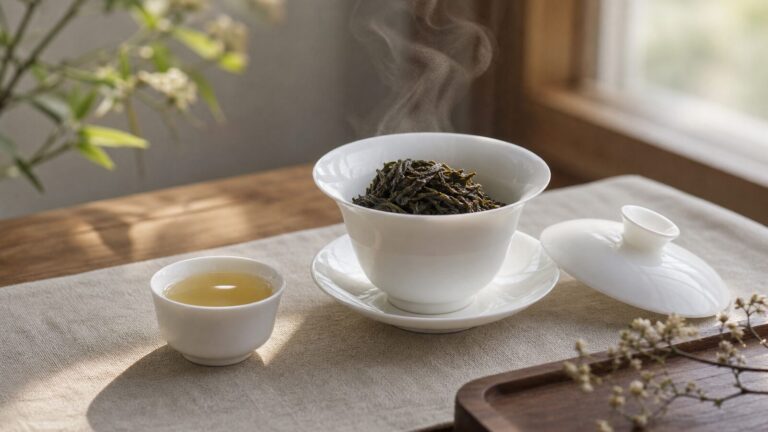
When brewing with a classic porcelain gaiwan, leave the lid slightly open or remove it completely between pours. This lets trapped heat escape. Using your teaware to regulate temperature keeps the leaves from stewing and turning bitter in later rounds.
The Influence of Water Quality
The chemistry of the water itself is easy to overlook when troubleshooting a bitter cup. Green tea is highly sensitive and absorbs qualities directly from its solvent. Hard tap water full of chlorine and heavy minerals binds tightly with tea compounds, creating a flat, metallic bitterness that covers the natural, sweet flavors underneath.
No amount of temperature control can fix a cup made with poor water. Switching to soft, filtered spring water is the easiest upgrade you can make.
Restoring the Balance
Improving your daily brew is all about testing one change at a time. When your tea tastes too bitter, adjust just one of these factors in your next session:
- Lower the water temperature — aim for 75 to 80°C rather than boiling.
- Shorten the steeping time — pour off the tea earlier than feels natural.
- Use slightly fewer leaves — less material means a slower, more forgiving extraction.
Understanding how sweet amino acids and bitter catechins interact gives you real control over your cup. You no longer have to guess at the results. Change one variable, taste the difference, and adjust from there.
References
- PMC: Brewing conditions, catechin content, and sensory acceptance in green tea – supports the link between brewing conditions, catechins, and perceived taste.
- PMC: Effects of brewing conditions in green tea infusions – supports temperature and extraction effects in green tea preparation.
Frequently Asked Questions
Bitterness occurs when hot water or long steeping times over-extract catechins from the leaves. These bitter polyphenols quickly overwhelm the sweet, natural amino acids. Lowering your water temperature and shortening brew times will prevent this.
High-quality whole leaves usually need between one and two minutes. If you are using a traditional Chinese gaiwan, the steeping time is even shorter, often just five to fifteen seconds per pour. Broken leaves require significantly less time to avoid bitterness.
Pour boiling water into an intermediate pitcher or mug before it touches the leaves. Each transfer to a cool vessel drops the water temperature by roughly ten degrees Celsius. This traditional method requires no digital thermometers or gadgets.
You cannot remove the extracted bitter compounds once they are in the cup. However, diluting the brew with a splash of warm water can make the taste more palatable. Alternatively, let it cool and pour it over ice to soften the harshness.
Yes, cloudy green tea is perfectly safe to drink. Cloudiness usually indicates that the tea has cooled rapidly or that bitter catechins have over-extracted into the water. It affects the flavor and appearance, but poses no health risk.
Thin porcelain gaiwans or glass vessels are ideal because they do not trap excess heat. Heavy clay or cast iron pots tend to stew delicate green leaves, causing bitterness. Our collection at East Artisan focuses on hand-glazed porcelain gaiwans designed specifically to let leaves breathe.
Yes, bitter tea often contains more caffeine because both caffeine and bitter catechins extract more heavily with hotter water and longer steeping times. However, the harsh taste makes the drink far less enjoyable. Adjusting your brewing method yields a smoother cup with a balanced caffeine release.